
Playing Chess in Paris: Clubs and History
Few places have shaped chess history like Paris: from the 1730s, François-André Philidor and Kermur de Legall played at the legendary Café de la Régence, and later Morphy, Anderssen, Steinitz, Lasker, Alekhine and Capablanca all passed through its doors. This guide collects what is actually accessible in today's club scene. Where something could not be verified, it is not listed here.
Chess clubs in Paris
The Ligue Île-de-France des Échecs runs the clubs in the region. The following selection shows clubs whose game night is publicly listed. A dash means the club does not publish the time permanently, so it's worth checking the club's website.
| Club | District | Game night |
|---|---|---|
| Tour Blanche | 20th arrondissement | Monday & Wednesday 7:30–10:30 pm, Saturday 3:00–7:00 pm |
| L'Échiquier de Paris | 3rd arrondissement | – |
The complete list of all member clubs is kept by the Ligue Île-de-France des Échecs. Please check each club's website for current dates – game nights regularly shift during school holidays.
A note for a first visit: Tour Blanche, founded in 1945 in the 20th arrondissement, today has around 270 members in some 30 teams and hosts one of the three most important rapid chess tournaments in France every October. With FIDE-rated coaches, L'Échiquier de Paris specifically targets young players aged 5 to 20 and organizes its own international festival, including a FIDE Open.
With dozens of independent clubs, Paris is covered across almost every arrondissement – from Club 608 in the centre to L'Échiquier de la Butte in the 18th arrondissement and numerous smaller clubs that can be found through the Ligue Île-de-France and the HelloAsso platform. This density usually makes it possible to find a club within walking distance rather than having to cross the whole city.
Playing chess outdoors: chess tables and meeting spots
The City of Paris itself lists chess among its official leisure activities, and the Jardin du Luxembourg and several other Paris parks have traditionally had public chess tables – a direct continuation of the city's centuries-old café and park chess culture.
Anyone wanting to play on the go is best served by a foldable travel set that fits in any bag and is ready to use both in the park and at the club. Anyone who comes across a board by chance in the Jardin du Luxembourg or another Paris park is ultimately continuing a practice that was already cultivated in 18th-century Paris – long before there were formal club structures.
Tournaments and open events
Every October, Tour Blanche organizes its long-standing festival, which ranks among the three most important rapid chess tournaments in France. With the Festival International d'Échecs and its own FIDE Open, L'Échiquier de Paris hosts two further international tournaments each season. Alongside these, the Ligue Île-de-France organizes the regional championships, in which Paris clubs take part with their teams.
Anyone entering a tournament for the first time should know beforehand what equipment is required. The dimensions are not a matter of taste but are regulated – see our article on the official tournament chess standards.
Having two Paris clubs that organize internationally oriented, FIDE-rated tournaments is unusually many for a single city and reflects the importance of Paris in the French and European tournament calendar. Anyone wanting to earn an international rating will therefore find suitable opportunities not only in the club leagues but also at these open tournaments.
Chess for children and teenagers
L'Échiquier de Paris is entirely focused on children and teenagers aged 5 to 20, with coaches who hold a federation coaching licence, have at least ten years of experience and an international FIDE rating. Tour Blanche also runs an École des Jeunes, whose school year starts each September with a Saturday session.
Getting started at home requires little at first: a board of a sensible size and pieces that smaller hands can grip well. Which square size suits which king height is covered in our article on chessboard size.
Anyone wanting to bring their child for the first time will find fixed, recurring sessions at both clubs rather than a one-off taster. It is precisely the combination of licensed coaches and a long club history that makes youth development in Paris particularly well structured by French standards.
Paris and chess history
The Café de la Régence at the Palais-Royal, opened around 1680 as a simple coffee house and renamed in 1718 after the regency of the Duke of Orléans, became the centre of a distinct “French school” of chess from the 1730s and 1740s onwards. It was here that Kermur de Legall and his pupil François-André Philidor rose to prominence – Philidor, also one of the most important composers of his time, revolutionized the strategic understanding of the game with his analyses and is still regarded as one of the most influential theorists in chess history. His famous saying that pawns are “the soul of chess” dates from exactly that period at the Régence and continues to shape opening and pawn-structure theory to this day.
For decades the Régence attracted great minds such as Diderot and Rousseau and remained the most famous chess venue in the world well into the early 20th century: Paul Morphy played his legendary games there in 1858, and Anderssen, Steinitz, Lasker, Alekhine and Capablanca also paid their respects over the decades. Just a few steps away, the Salon des Échecs was founded in 1777 at the Café de Foy – according to current knowledge the first independent chess club in France, under the patronage of the Count of Provence, the future King Louis XVIII. The exclusive club required the unanimous approval of all members for new admissions and was closed in 1796 by the Directory government as “aristocratic”.
After relocating as a result of Haussmann's urban redevelopment around 1852/53, the Régence finally lost its special status with the founding of the Fédération Française des Échecs in 1921 – organized club chess became decentralized across Paris. This decentralization still shapes the city today: a single legendary coffee house has given way to dozens of independent clubs that spread the former radiance of the Régence across the whole city.
It is remarkable how long activity continued at the old address: a photograph from 1920 already shows the venue as a restaurant with an orchestra, yet occasional chess play is said to have continued into the 1940s before the former world capital of chess lost its special role for good. Anyone exploring the Paris club scene today is therefore following in the footsteps of a tradition that has grown over more than two centuries – even if no single venue plays the role of the Régence any longer.
Frequently asked questions
Where can I play chess in Paris without a membership?
Most easily at one of the public chess tables in the Jardin du Luxembourg or through the open club evenings, for example on Mondays and Wednesdays at Tour Blanche in the 20th arrondissement.
Which Paris chess club is suitable for beginners?
With licensed coaches, L'Échiquier de Paris specifically targets young beginners aged 5 to 20. With around 270 members and 30 teams, Tour Blanche offers a broad entry point for all age groups.
Why is Paris considered so important in chess history?
From the 18th to the early 20th century, the Café de la Régence was the most famous chess venue in the world, with Philidor, Morphy, Steinitz, Lasker, Alekhine and Capablanca among its guests.
When do open chess tournaments take place in Paris?
In October, Tour Blanche hosts one of the three most important rapid chess tournaments in France, and L'Échiquier de Paris also organizes an international festival with a FIDE Open.
From Philidor to today: Paris chess history you can hold in your hands
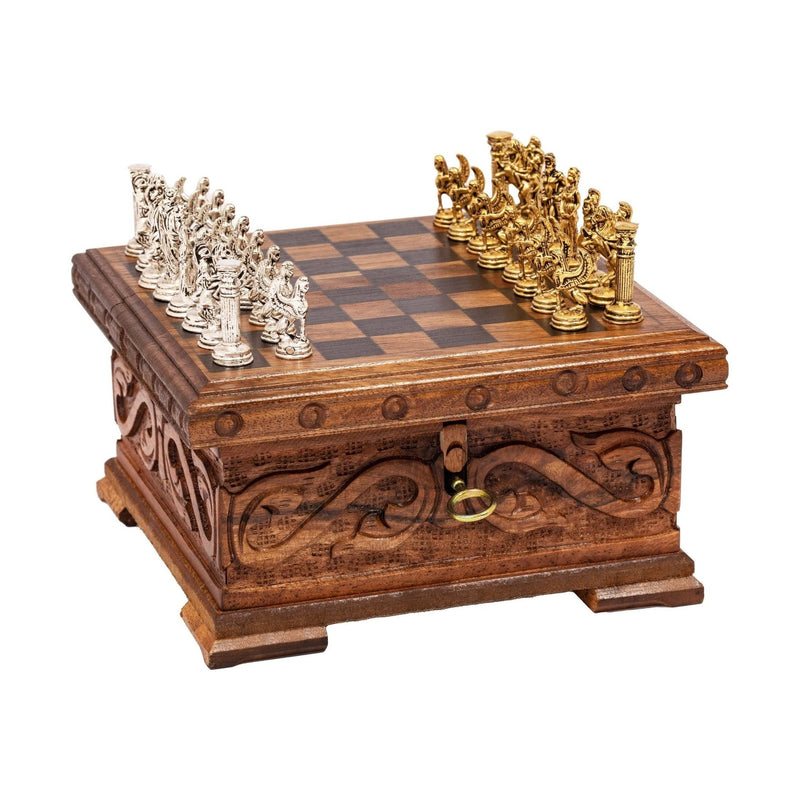
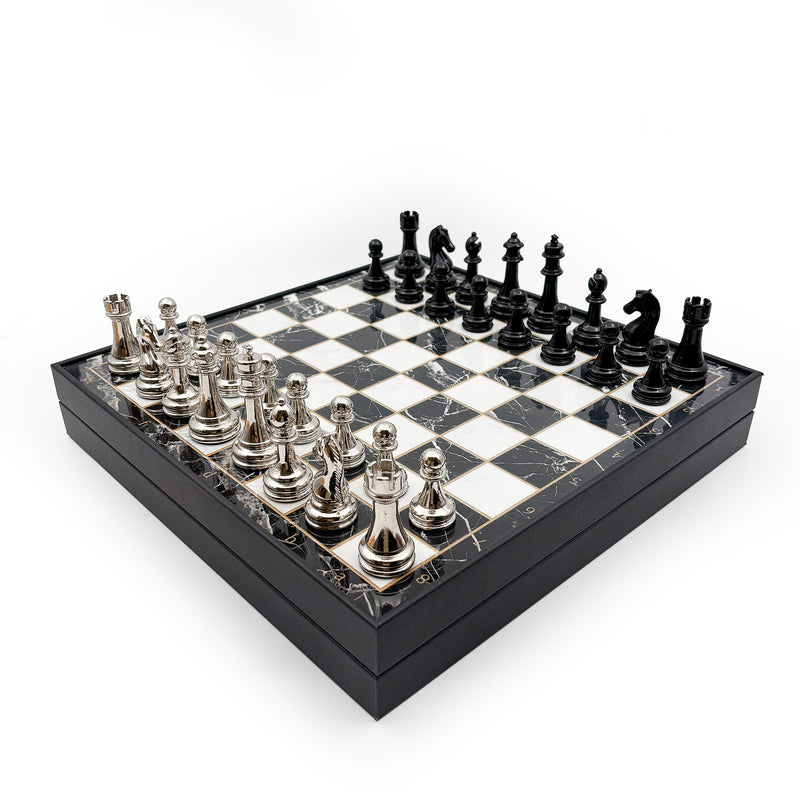
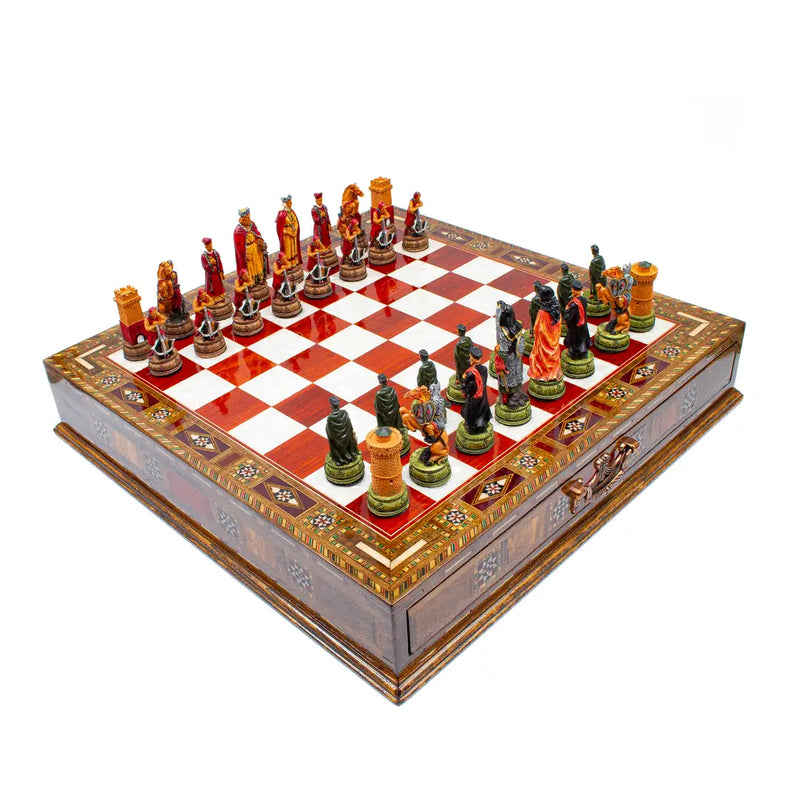
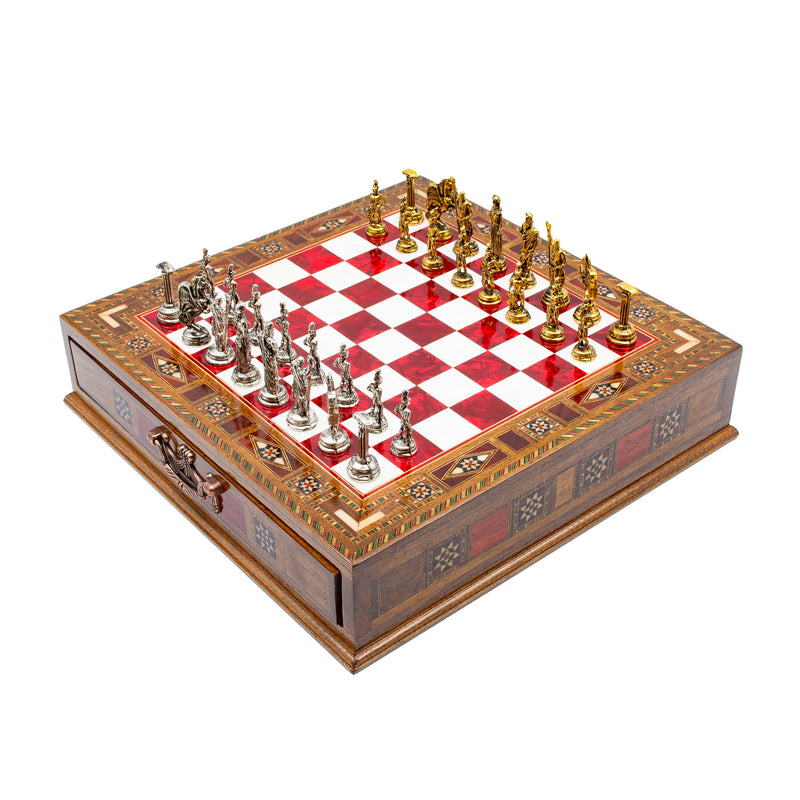
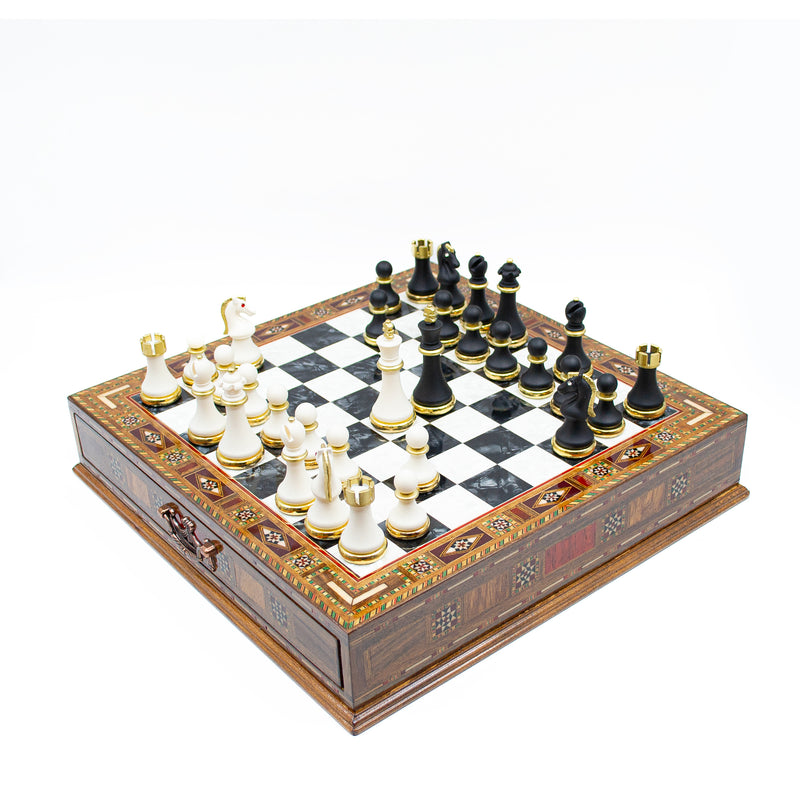
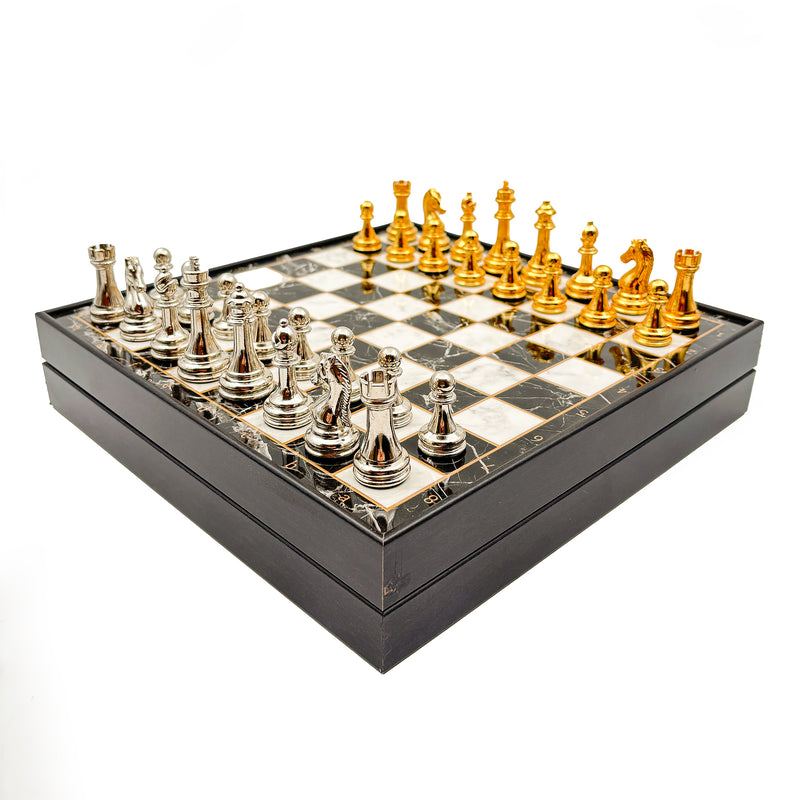
Anyone who has played with borrowed equipment in the park or at the club quickly notices the difference to a well-made set of their own. For a regular game night, our handcrafted wooden sets are a good fit – solid wood, visible grain, pieces with noticeable weight. Anyone wishing to honour the great history of the Régence, from Philidor to Capablanca, will find boards with character and patina among our collectors' pieces. And for a gift to a club member after a tournament win, it's worth looking at our engraved sets: a dedication in the wood outlasts any trophy. Soho Chess is a Berlin brand. Take a look around.
Read more about chess culture in Lausanne and in the German capital in our articles Playing chess in Lausanne and Chess and Berlin.