Article: Antique Chess Board: Spotting Authenticity, Estimating Value, Alternatives
Antique Chess Board: Spotting Authenticity, Estimating Value, Alternatives
Antique chess boards are fascinating – and it is a field where it is easy to be fooled. This article shows how to check authenticity, what determines value, and what to do if you want the look of a historical board but do not need an antique.
One thing up front, so it is clear: Soho Chess does not sell antiques. All of our sets are new. That is exactly why we can be honest here.
What counts as “antique”
Rule of thumb: at least a hundred years old. Anything younger is vintage or simply used – the difference is explained in Vintage Chess Board: Styles, Woods and What to Look For.
How to recognize authenticity
Tool marks. Antique pieces were turned or carved by hand. Small irregularities are a good sign; exactly identical pieces are a bad one. More on this in Handcrafted or Mass-Produced.
Aging. Genuine patina forms unevenly where a piece is handled: on the heads, edges, and the center of the board. Evenly applied “antique finishes” look artificial. How patina really develops is covered in its own article.
Style and dating. The Staunton design has existed since 1849. A set in the Staunton style that supposedly dates from the 18th century cannot be right.
Marks and provenance. Maker’s stamps, the original box, old receipts or an unbroken chain of ownership all add credibility.
Ivory and species protection
Antique pieces are often made of ivory or bone. Trade in ivory is subject to strict species-protection rules. Ask for documentation before you buy and check with the competent species-protection authority – a piece without papers can become a problem for the buyer.
What determines value
Maker and origin. Signed pieces from well-known workshops fetch more than anonymous ones.
Age and material. Rare materials and well-datable periods make a difference.
Condition and completeness. A missing or replaced piece lowers the value.
Documentation. Without proof, much remains a claim.
The price range is enormous. For a reliable assessment, turn to an auction house or an expert appraiser.
Buy antique or new in a historical style?
| Antique chess board | New set in a historical style | |
|---|---|---|
| Age | at least a hundred years | new, modeled on the style of an era |
| Condition | Signs of use, sometimes incomplete | complete, uniform |
| Authenticity risk | verification or appraisal needed | not applicable, openly declared as new |
| Playability | dimensions often inconsistent | dimensions known in advance |
| Personalization | rarely makes sense | engraving possible |
| Use | more of a collector’s object | play and decoration |
Soho Chess: new sets in a historical style
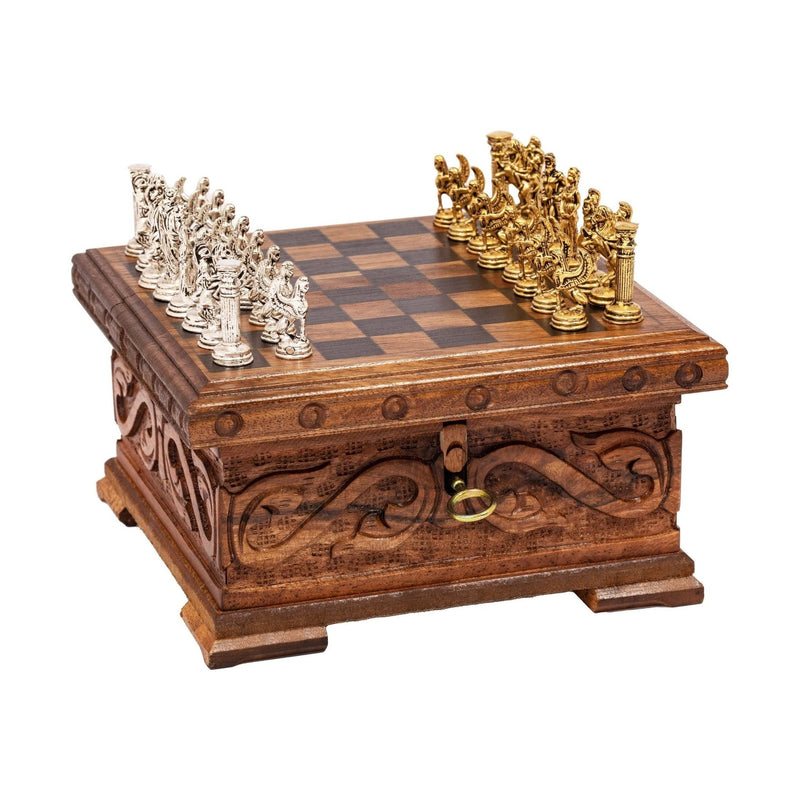
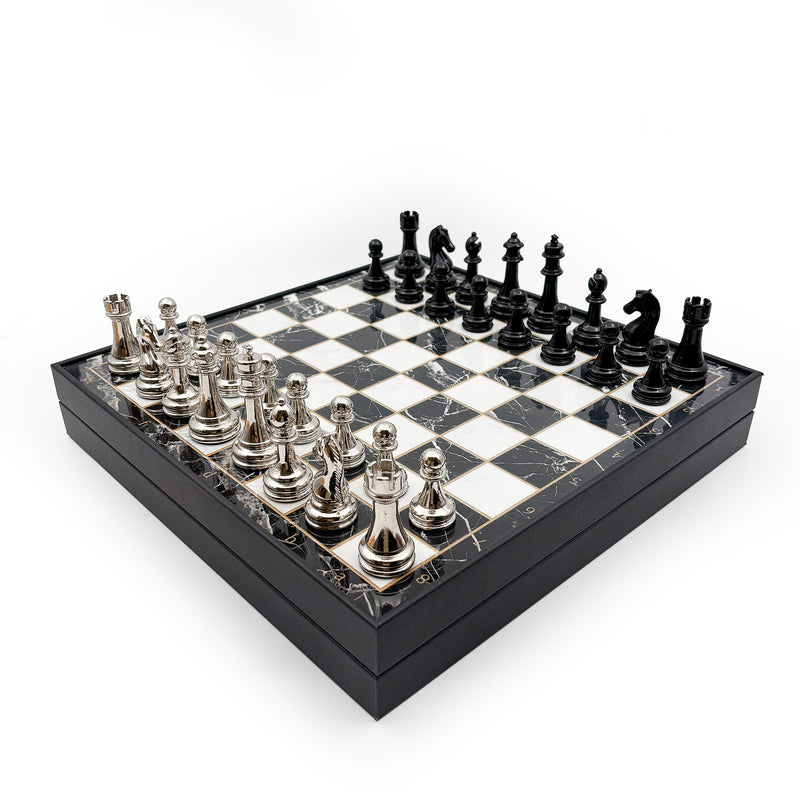
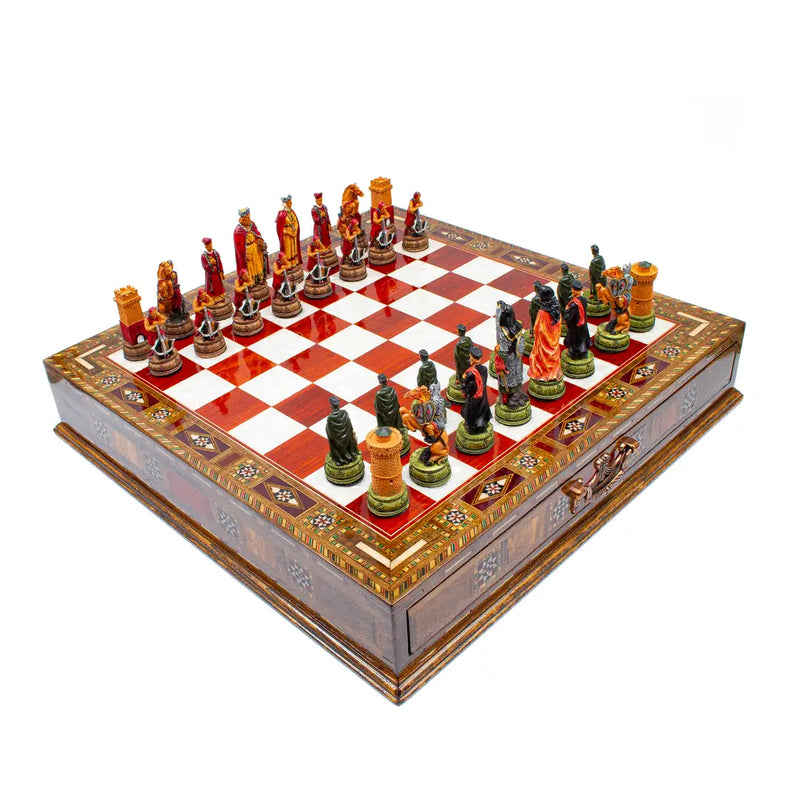
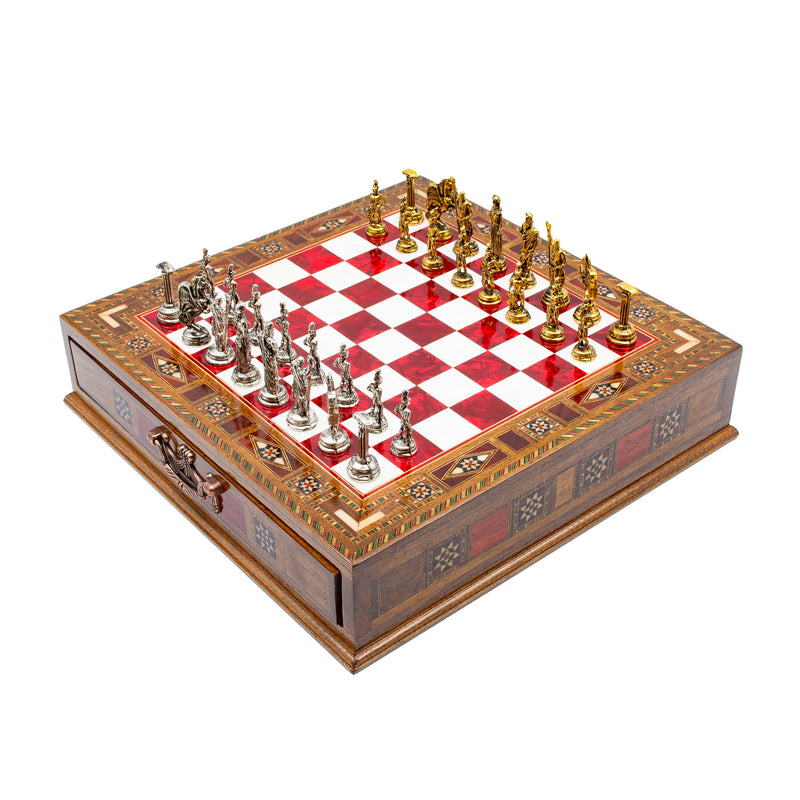
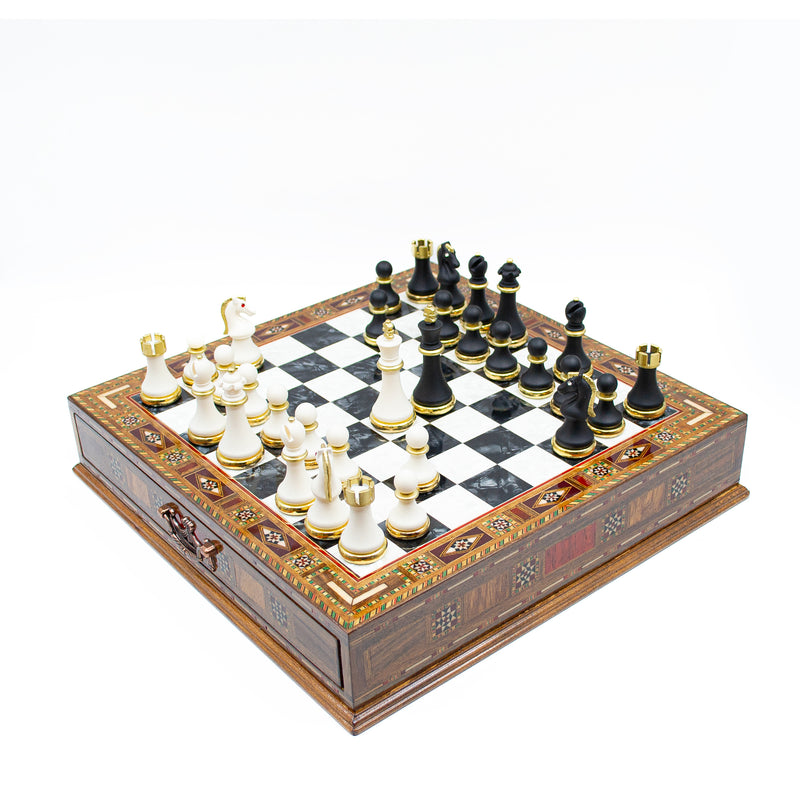
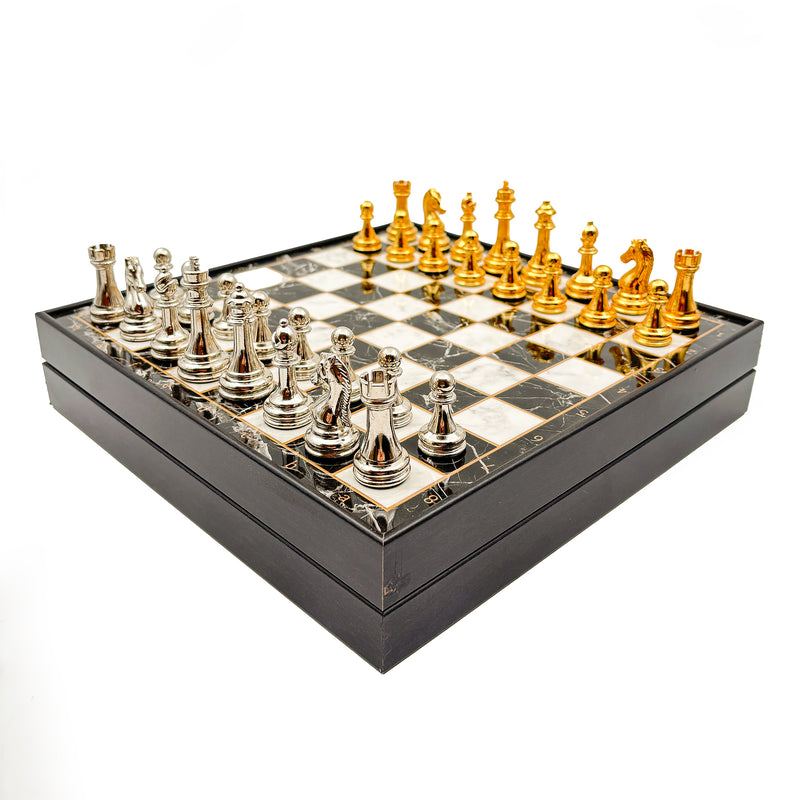
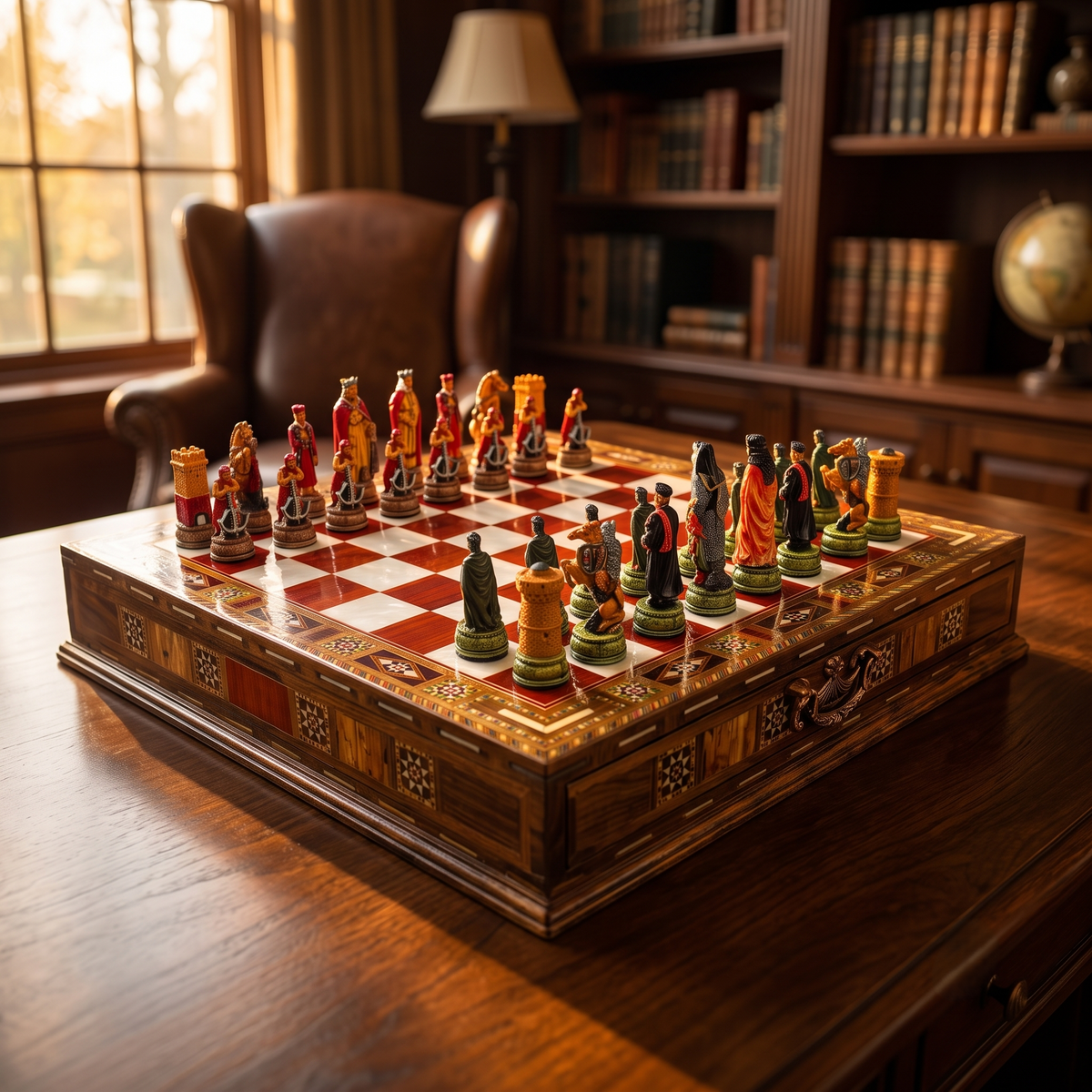
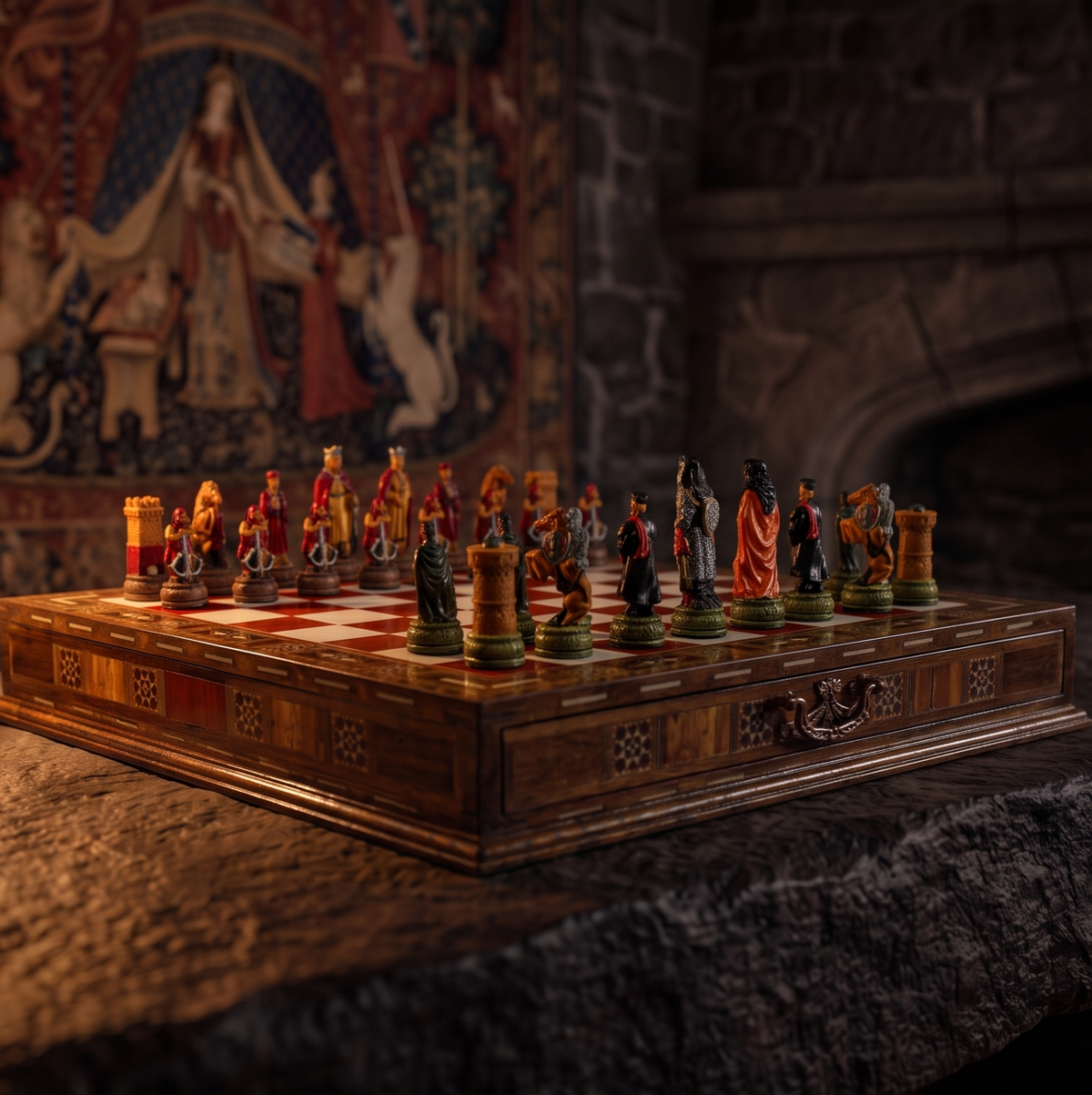
All Soho Chess chess sets are new – not antiques. If you like the look of a historical board, you will find sets in the Roman Empire design such as Legio and Palatin, in the style of Arthurian legend such as Avalon with hand-painted pieces, as well as mosaic and inlay boards. Engraving included.
→ Explore luxury chess sets & collectibles
Soho Chess: at home in Berlin
Soho Chess is at home in Berlin. Every set is genuinely handcrafted by experienced makers.
Frequently Asked Questions
When is a chess board considered antique?
As a rule, when it is at least a hundred years old. Younger pieces count as vintage or used.
How do I recognize a genuine antique chess set?
Look for tool marks, uneven aging on handled areas, consistent dating (for example with the Staunton design) and maker’s marks or documentation of provenance.
Can a chess set in the Staunton design be antique?
Yes, if it dates from the period between 1849 and roughly a hundred years ago. Earlier dates do not fit this design.
Are Soho Chess chess sets antique?
No. All sets are new, many designed in a historical style.
Where can the value of an antique chess set be appraised?
At an auction house or with an expert appraiser of antiques.